8 Nov 2011

16 May 2011
9 May 2011
The Invisible Wheelchair
Cuts seem to have become a major issue for everyone in the UK. Also Organisations supporting disabled people are facing cutbacks.
But what does this really mean? We take a look at one organisation and at the group they support.
30 Apr 2011
26 Mar 2011
The boat race

Two friends - Charles Merivala, a Cambridge University student and his Harrow school friend Charles Wordsworth, who was a student at Oxford came up with the idea.
On 12 March 1829 Cambridge sent a challenge to Oxford - the tradition was born which has continued to the present day - the loser of the previous year's race challenges the opposition to a re-match.
The race still runs along the same lines from Putney to Mortlake, but has now become a major international sporting occasion, drawing millions of viewers from around the world.
This year Oxford was the lucky winner. But Cambridge still leads the serience by 80-76. The 157th Boat Race takes place on Saturday, 26 March 2011 at 17:00.
Watch finish line moments 2011:
Apple's iPad 2 launch, London

Yesterday Apple released the iPad 2, the next generation of its device for browsing the web, reading and sending emails, enjoying photos, watching videos, listening to music, playing games, reading ebooks and more.

Whooping, clapping and cheering by the mass of blue t-shirt wearing staff inside greeted the first customer through the door at 17:00.
Starting outside the store the queue stretched the entire length of Hanover Street, then as far as the eye could see down St. George Street.
Those nearer to the front of the queue have been in place since the day before.
Does Apple turn human beings into maniacs?
Being a huge Apple fan myself, I understand that being one of the lucky iPad 2 owners must be magical. But why do people have to be first holding the new device in their arms?
 Does it make a difference to wait a few days and then just go into a shop and get one? Isn't it so much easier?
I talked to a guy waiting in the queue: "It is not about being first. It is about being here, enjoying a fantastic, sunny day with friends - doesn't it look more like a festival to you too?"
Well, I must admit, it was a great day and the atmosphere was incredible. Is Apple the new culture?
15 Mar 2011
11 Mar 2011
Under construction
www.london-performers.co.uk is what 7 journalism students, including me, have been working on the last couple of weeks.

London Performers is a multimedia website, showcasing the distinguished talent in London. It incorporates informative writing, photography and multimedia content to reveal the unknown side of cult and popular culture.
Our aim is to encapsulate the trends of London's current entertainment scene through publishing issues focussed on certain groups of performers.
 It is a website aimed at anyone interested in performing and anyone visiting or living in London.
We hope to expose entertainers who may be beginning their career, or those who have never had the right coverage before.
We want to expose London's entertainment in all its glamour and grime.
We will look at specific groups of performers in London, each aiming to take the theme of 'performing' in a literal and abstract sense.
Every story aims to explain what these performers do, why they do it and how they are doing it.
We are a team of seven international journalists working together to produce a truly original take on what London has to offer.
Check it out: www.london-performers.co.uk
18 Feb 2011
The Jasmine Revolution
Today Francis Ghilès from the Centre for International Relations & Development Studies spoke amongst others at the Chatham House event on Tunisia’s Jasmine Revolution.
After Ben Ali’s resignation, who is currently in coma after a stroke, the media quickly moved on to other countries like Egypt, Bahrain and Algeria – where the action is. But what is happening to a country after its leader has left? Let's go back to where it all started.
Ghilès reminds of the islamic revolution of 1979 but says today it is different. The people are more individuals than 30 years ago. They have changed and the political Islam no longer finds affection.
What fascinates the people in the Maghreb region is Turkey, Ghilès says, the combination of Islam and democracy is interesting to them. The revolution in Tunisia and also Egypt is a question of dignity. Under the repressive regime there was no room for dignity.
Ghilès tries to explain the differences between Tunisia and Egypt. As example he states that the birth rate collapsed in Tunisia and in Egypt not. Also north Africa is much more influenced by France and Europe; this is a huge difference to the Middle East.
Domino effect
Ghilès doesn’t like the idea of a domino effect. He thinks Algeria and Morocco are more stabile countries than Tunisia and Egypt. Still corruption and unemployment can be found there too.
He says the biggest problem here in Europe is that people don’t know enough about North Africa and the Middle East and their history. In France the Middle East studies have collapsed. Journalists don’t have the knowledge to report about the whole picture. Inland Tunisia is poor. Where can we find that in the media?
He says the biggest problem here in Europe is that people don’t know enough about North Africa and the Middle East and their history. In France the Middle East studies have collapsed. Journalists don’t have the knowledge to report about the whole picture. Inland Tunisia is poor. Where can we find that in the media?
Ghilès carries on and talks about the differences between Tunisia and Algeria with its revolts they have over and over again. Algeria has a diminished middle class and lost many people in the civil war. Tunisia doesn’t have those problems.
Karama stands for dignity
The rebelling all over the Maghreb region is because people want to be respected – Karama – it is all about dignity, Ghilès explains. He adds democracy won’t make things easier. And he thinks an election in Tunisia in six month time is simply not possible. It takes much longer to build political parties and to "clean up the police" that still has the old pictures in their heads.
Ghilès speaks about the demonstrations in Algeria last Saturday and is asking who is manipulation whom?
Ghilès knows for sure the future generation of Tunisia became into being when the Tunisians lost their fear of the police. Fearless and with dignity – that’s the new Tunisia.
Let's see what the future might hold for Tunisia.
Ghilès knows for sure the future generation of Tunisia became into being when the Tunisians lost their fear of the police. Fearless and with dignity – that’s the new Tunisia.
Let's see what the future might hold for Tunisia.
17 Feb 2011
Three protestors killed in Bahrain
Dozens of armor-cased vehicles drove against Pearl Square Thursday morning in the capital Manama, where protestors have built up their base.
Encouraged of what happened in Egypt and Tunisia also in Bahrain members of the opposition called for a “day of anger”. In the last couple of days protests in countries throughout North Africa und the Middle East took place.
The square where the night before about 2000 protestors have camped was deserted on Thursday morning and littered with abandoned tents and blankets. Since the beginning of the protests three days ago five people have been killed at riots.
The changes of power in Tunisia and Egypt have encouraged thousands of protestors in the last couple of days to demand the resignation of the Sunnite family.
The Shiite majority of population moans about being excluded from housing market, health system and governmental place of employment in the archipelagic state of Saudi-Arabia.
12 Feb 2011
Impressions of celebrating Egypt
People are celebrating all over the world. Egypt is a free country.
At Trafalgar Square in London people stood in solidarity with the people of Egypt, the wider Middle East and North Africa in their demands for an end to repression, for their freedom, their basic human rights, and immediate democratic reform.
"It's the first step," say the Egyptian protesters. "We have got rid of the dictator. Now we must get rid of the dictatorship."

We all are Egypt. Press play to listen:

What do people have to say on Trafalgar Square?
Press play to listen:


Message from Trafalgar Square to Tahrir Square. Press play to listen:
Naji Al Ali, Gender Studies SOAS, about women rights in Egypt. Press play to listen:

Proud to be Tunisian. Press play to listen:

11 Feb 2011
What a difference a few hours make
Egypt is celebrating the start of a new era and is changing the history of the whole Middle East. On Friday Mubarak stepped back and left the people in his country. On Saturday the future begins.
The people of Egypt have reached their goal. After 18 days of demonstration they finally got the long wished revolution. Mubarak is off to the red sea, where he is staying at tourist haunt Sharm el-Sheikh.
Suleiman had the news
But not Mubarak himself announced the news. It was vice president Suleiman. Mubarak was brave enough to step in front of his people on Thursday to tell them he will be dying in Egypt.
He told them he would not leave the country before the new election in September will hand over his power to the new elected president. He said, he would keep his pledge. One day later, he changed his mind and broke his promise. Again.
Except this time, this is what the people have waited for for a very long time.
Tahrir stands for Liberation - and that is what the Egyptian people faced today. Freedom.
Obama compared the situation in Egypt in his speech he held a few hours after Mubarak's denouncement with the fall of the Berlin wall in Germany. The Egyptian people have spoken and they were heard.
Start of the future or beginning of the end?
But what is it Egypt will face in the future? What if all they get is the old regime with just a new face? Is it too early to celebrate? And will all this really end in democracy?
The media is talking about a domino effect of uprising against the government, first Tunisia, now Egypt - who might follow? While Zine El Abidine Ben Ali and Mubarak might slurp their cocktails at a Beach Resort, I am asking: Who will join the cocktail party next? Jordan, Yemen, Syria and Libya? Kuwait and Bahrain? Iraq and Lebanon? Turkey and Qatar?
Fukujama wrote in 1992 about the end of history. Democracy as the final solution for all of us. Is this the beginning of the end?
 |
| Down he is. |
Suleiman had the news
But not Mubarak himself announced the news. It was vice president Suleiman. Mubarak was brave enough to step in front of his people on Thursday to tell them he will be dying in Egypt.
He told them he would not leave the country before the new election in September will hand over his power to the new elected president. He said, he would keep his pledge. One day later, he changed his mind and broke his promise. Again.
Except this time, this is what the people have waited for for a very long time.
Tahrir stands for Liberation - and that is what the Egyptian people faced today. Freedom.
Obama compared the situation in Egypt in his speech he held a few hours after Mubarak's denouncement with the fall of the Berlin wall in Germany. The Egyptian people have spoken and they were heard.
Start of the future or beginning of the end?
But what is it Egypt will face in the future? What if all they get is the old regime with just a new face? Is it too early to celebrate? And will all this really end in democracy?
The media is talking about a domino effect of uprising against the government, first Tunisia, now Egypt - who might follow? While Zine El Abidine Ben Ali and Mubarak might slurp their cocktails at a Beach Resort, I am asking: Who will join the cocktail party next? Jordan, Yemen, Syria and Libya? Kuwait and Bahrain? Iraq and Lebanon? Turkey and Qatar?
Fukujama wrote in 1992 about the end of history. Democracy as the final solution for all of us. Is this the beginning of the end?
10 Feb 2011
Change in Egypt?
President Mubarak's speech on Thursday disappointed a lot of people throughout Egypt. He didn't step back, he didn't step aside.
Mubarak said in his speech he would keep his pledge. He transferred some of his power to the vice president Suleiman and will lift the state of emergency, but only if the situation was stabile.
He also said death's that occurred during the last 17 days of demonstrations will be investigated.
 But people on the streets fear after 30 years of broken promises, he will break his promise again. The people of Egypt want to see a change right in front of their eyes.
Now they fear more corruption. People expected to hear something different. They hoped Mubarak would transfer all of his powers and step back.
Mubarak said Egypt will not listen "to dictates from abroad", he will not be dictated by foreign countries, he told the US to back off. The message was clear: Egypt is sitting in the driving seats.
Suleiman speaks to the Egyptian people
Vice president Suleiman hold a speech just after Mubarak. For him with the movement of the 25th January history has begun - history that changes into democracy.
He strengthened Mubarak's words and underlined that Mubarak is aware of the seriousness of the situation. The president's supreme interest is of the country above anything else, he said.
Suleiman said he was empowered to preserve the achievement of the country and to restore the stability and happiness in Egypt.
He asked the people to contribute to this goal and added Mubarak has opened a door of dialogue and reached understanding.
The door is still open for more dialogue. Suleiman says he is committed to whatever he can do to achieve a peaceful transfer of power.
He asks all citizens to look forward to the future full of freedom and democracy. He is sure; the people will never choose the danger of chaos.
What will happen?
But they might do. On Tahrir Square one can hear words like "he has to leave, not we have to leave". Now people might march to the president's palace, which is 15-20 miles away from Tahrir Square.
How will the army respond to this? Will they stand by or step in? They need to decide between Mubarak and the people of Egypt.
6 Feb 2011
Road to Revolution
While marching to the Egyptian Embassy yesterday the message was clear: "Power to the Egyptian People", "Hands off the Middle East", "Down with Mubarak!"

"We march from the home of the puppet master, represented by the US Embassy to the home of the puppet, the Egyptian Embassy" were the opening words on Saturday's Solidarity for the Egyptian people demonstration organised by the Stop the war coalition (STWC).
Eyewittness talks about her experience at Tahrir Square
Speakers included Tariq Ali, Vice President of STWC and Cairo eye-witnesses, who spent four days last week at Tahrir Sqaure in Egypt. For her those days were the "most inspiring and humbling experience."
 She spoke about what she has seen on Tahrir Square: People in Egypt have lost their fear. They don't want foreign intermission. They want to make their own decisions.
Tariq Ali about what will happen next
"Have no doubt" is what Tariq Ali is repeating. He is certain that the US want to replace Mubarak with as he says "a less known torturer: Suleiman."

"Suleiman and Mubarak made Egypt into a torture camp. No to Mubarak but no also to Suleiman. We want the entire regime to go."
Thousands of people had to go on the streets and fight to make the world understand what is happening in Egypt.
Ali says, they understood, the only one who didn't is Tony Blair. People laughed. He called him corrupt and shameless.
 To Ali what is happening in Egypt today is also a response to the war in Iraq and Afghanistan.
Londons view
While marching to the Egyptian Embassy, I talked to one of the protestants. For him the people in Egypt are heroic.
 "Mubarak is gone already, he is just finding an exit stragedy" was his answer when I asked what he thinks will happen next. "The people have lost their fear, there is no way back. Mubarak is a dead man."
Another protestor told me people in Egypt will hold out longer than others might think. They waited a long time for this.
She is sure that the power of the Egyptian people is very strong. She told me that it started amongst people who had nothing and they just want to have something better for their children. "They have nothing to loose."

An unordinary sight for some of us. At this demonstration Islam, Christianity and Judaism are fighting together in what they belief: In a better future for Egypt.
Acting = good. Included history lesson = even better.
The King's Speech. A short review.
 Living in London and not knowing too much about the royal family and history just doesn't go together. The King's Speech tells the story of King George VI of Britain, father of Queen Elizabeth II. and his stutter issue.
This movie taught me, Colin Firth is more than just a cheesy englishman that has to cope with various love affairs. He is a real actor and he can do much more than impress with his nice accent and formal conservative affectation.
Seing Westminster Abbey before a coronation - yes it was just a movie - made me realize how fascinating the history of the Royal family is.
The Royal Family
Harry's and William's gossip stories about partying, falling in love and getting married were the only reason I was interested in the royal family's life before. Now I am even more interested in the background and history of the family.

I can't remember the last time a movie didn't just entertain but also activate an appetite for more. This movie released so close to the big wedding of Kate and William sets the reputation of the royal family in a very bright light of even more interest in what is going to happen next.
Seing Queen Elizabeth II. as a cute girl, beloved by her father, changes my impression of a cold, old woman. Well, she is human after all.
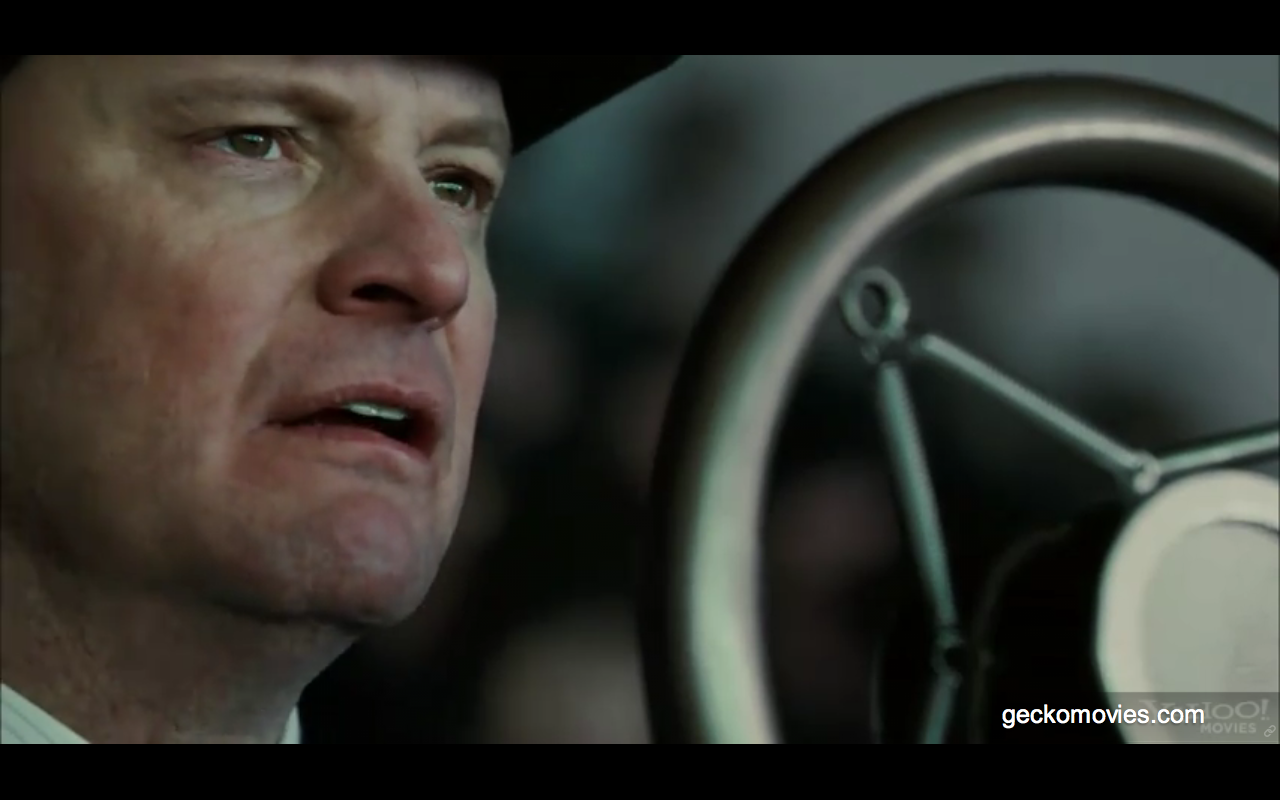
This movie taught me, Colin Firth is more than just a cheesy englishman that has to cope with various love affairs. He is a real actor and he can do much more than impress with his nice accent and formal conservative affectation.
Seing Westminster Abbey before a coronation - yes it was just a movie - made me realize how fascinating the history of the Royal family is.
The Royal Family
Harry's and William's gossip stories about partying, falling in love and getting married were the only reason I was interested in the royal family's life before. Now I am even more interested in the background and history of the family.

I can't remember the last time a movie didn't just entertain but also activate an appetite for more. This movie released so close to the big wedding of Kate and William sets the reputation of the royal family in a very bright light of even more interest in what is going to happen next.
Seing Queen Elizabeth II. as a cute girl, beloved by her father, changes my impression of a cold, old woman. Well, she is human after all.
2 Feb 2011
Smile For London
The Underground has never been the most welcoming place, but it feels like this time of the year it is especially depressing.

The Christmas lights have been removed, the sun won’t appear for another few weeks and the recession is still part of our everyday life.
A cultural company has set up an interesting way to take some colour hundreds of feet below the earth - to the London Underground.

Eliza Cloppenburg and Laura Geissweiller explored the world of a smile.
Press play to listen:
19 Jan 2011
A Tower.
Press Play to listen:


Her Majesty’s Royal Palace and Fortress, better known as the Tower of London was build in Middle Ages along the river Thames. It was used as castle, strong house, royal palace and prison for prisoners of the upper class. More over the coin, the city archive, the armory and a observatory was placed there.
Until Jacob the first all British Kings and Queens were living there from time to time. It was common practice that the monarch would sleep in the Tower the night before coronation and would ride in festive procession through the city to Westminster.
Today the British crown jewels are stored in the Tower, also a rich historical collection of arms and armour.
Wilhelm the conqueror ordered to build the White Tower at this place. It was supposed to secure the supremacy of the City of London and further regions to the Normans.
Expansion over the years
In the following centuries the castle was constantly expanded. It is surrounded by a wide moat. An outer wall is protecting the inner buildings. In the middle of the terrain there is the so-called White Tower almighty Keep. From a distance it seems to be quadratically, but three of the corners do not build a right angle and all four sides are of different length.
Today the Tower is a tourist attraction, since the British crown jewels are displayed here. But also the buildings itself, the collection of arms and armour and a last bit of the city wall of the antique city Londinium, what London was called in the Holy Roman Empire are making this place worth a visit.
World Cultural Heritage
By reason of its historical importance the UNESCO announced the Tower 1988 to world cultural heritage.
As postcard-attraction maybe more known but historically and functionally completely independent is the close-by Tower Bridge, which was named after the Tower. It was completed after eight years of construction in 1894.
15 Jan 2011
22 Nov 2010
Pulling out a tooth
One can hide a rotten tooth with claiming everything is okay. Sooner or later it will hurt and the tooth has to be pulled out. Ireland has waited almost to the last day.

Admitting Ireland’s bailout by the European Union and the International Monetary Fund was inevitable and almost like pulling out a tooth.
The bailout is an extreme embarrassment to Ireland and its people who have been extremely protective of their independence and sovereignty since the formation of the state.
“We serve neither King nor Kaiser but Ireland” was once written on a banner that hung from Dublin’s Liberty Hall in World War I.
There is an irony that now Britain, while not a member of the European monetary Union, is prepared to provide help as well. “Ireland is a friend in need and we’re here to help”, said George Osborne.
General election in January
The tooth is pulled out but the Irish people aren’t happy at all. The junior partner in the Irish Republic’s governing coalition, the Green Party called for a general election in January to provide “political certainty”.
John Gormley, the leader of the Greens, said on Monday the Irish people felt “misled and betrayed” after Brian Cowen, the prime minister, finally bowed to foreign pressure and agreed to the bailout from the IMF and EU.
Cowen’s coalition of his Fianna Fail and the Greens has a majority in the lower parliament of only three and the withdrawal of the support of the six Green politicians means it cannot survive.
The Irish government has accepted up to $124bn in loans and will publish a four-year budget plan on Wednesday to show how it will balance its books ahead of a budget for 2011 expected on December 7.
Protests expected
According to the Telegraph, Irish ministers are concerned over protests. Police already had to intervene after about 50 protesters forced their way into a security hut at Government Buildings in Dublin.
The news of the bailout has sparked anger within Ireland, where many people feel “humiliated” by the move.
The government has been saying for weeks that it didn’t need any aid and now it has turned around and said yes it does need it.
Ireland could be compared to a little child afraid of pain and exposure. It waited almost until the last day. It was time to pull out the tooth and to expose.
19 Nov 2010
Old meets New
On a rainy day there is nothing better than visiting a museum. These are the days when I finally try to tick all the things from my list, things I never found time for before.

This time it was raining really badly so I decided to visit the British Museum. Quite impressive building I must say, I felt small surrounded by huge walls – a fantastic combination of old and new.
People have recommended me to go to the watches and clocks exhibition room somewhere on the third floor. It was a hassle for me finding the right stairs to take, to climb them up and finally reach the third floor.
But there was an old bath tap I touched and wasn’t allowed to, so I got screamed at from the museums supervisor. There were old jewels, coins and battle equipment, but no watches.
I knew I was lost. After asking a helpful lady at the information desk I finally got what I came for. Kind off.
Time for disappointment
Maybe I am not easily to be impressed, but these were watches, clocks, and nice ones for sure, but a few of them could also come from my parents’ house. I was disappointed.
But, I must admit, I love this place. Just standing in the massive entrance hall, soughing about how impressive it is – was totally worth a visit.
I might come again, bring a huge lunch bag and have a picnic in the crowd of in ancient history interested people. I am part of it.
Subscribe to:
Posts (Atom)